Protests, violence, curfews: From France to Albania, why Europe'...
/ 2026-10-20 23:47:20Focus


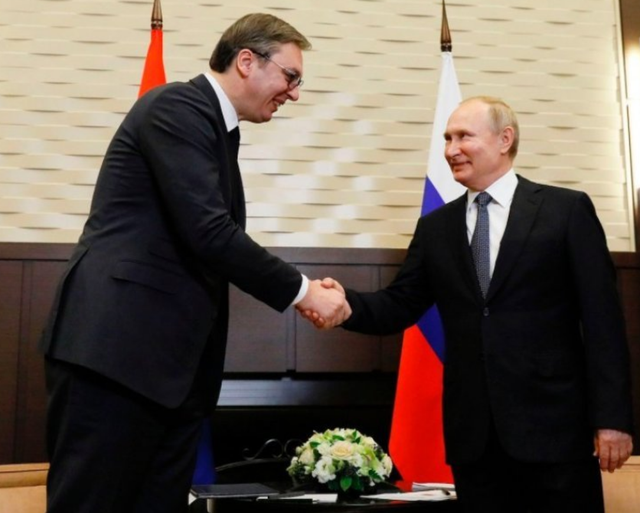
Serbia has expressed its readiness to support the European Union's sanctions against Russia, but on one clear condition: strong guarantees for EU membership.
This was stated by the Serbian Minister for European Integration, Nemanja Starovic, in an interview for the Austrian daily Der Standard, causing waves of reactions at home and abroad.
His statement comes at a time when Serbia has already allowed the transit through its territory of 960 155 mm caliber artillery shells, destined for Ukraine. The shells were produced in Bosnia and Herzegovina, were purchased by the Czech company Omnipol - which officially supplies the Ukrainian army - and passed through Serbia with the full approval of all relevant Serbian ministries.
According to official documents, Danas reports, on June 12, the Ministry of Interior of Serbia, with the consent of the Ministry of Defense and the Ministry of Foreign Affairs, approved the transit permit. Trucks with 132 pallets of shells have been allowed to pass from the Sremska Raca border crossing, through Serbia, and exit the EU via Horgosh, following a defined route: from the village of Kuzmin, the E-70 road to Belgrade, then on the E-75 towards the Hungarian border.
In the documents, the Czech Republic's Ministry of Defence is listed as the end user of the ammunition – a clear signal of Serbia's involvement in the logistical arms supply chain for Ukraine, despite its official neutral stance towards the war.
This development has been described by the pro-Kremlin media as a backlash for Russia. A media outlet owned by Konstantin Malofeyev, a close ally of Russian President Vladimir Putin, has warned: "It will be as usual with traitors."
There was no shortage of reactions in Serbia. The Socialist Movement party, close to the pro-Russian political spectrum, criticised Minister Starovic's statement and support for sanctions.
"Belgrade has no intention of participating in the anti-Russian hysteria," the reaction reads, which further adds that "Serbs are not a nation of traitors and cowards who sell their mother, brothers, faith and history," reinforcing the narrative of historical ties with Moscow.
This development comes in a complicated context for Serbian foreign policy, which is trying to balance between Western pressure to align foreign policy with the EU and the continued support it has had from Russia, especially on the issue of Kosovo.
Whether Serbia will follow the path of sanctions on Russia remains to be seen - but the latest signals, such as the transit of weapons for Ukraine, are leading Belgrade towards a course closer to the West, at the price of a possible clash with Moscow.