Protests, violence, curfews: From France to Albania, why Europe'...
/ 2026-10-20 23:47:20Focus


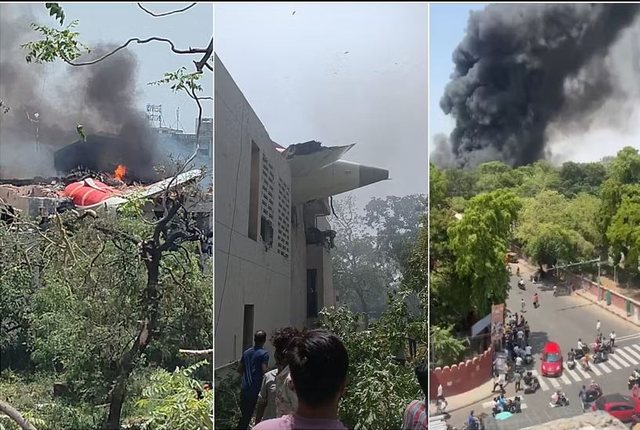
The investigation into the tragic crash of Air India Flight 171 continues in earnest as more details emerge about what happened in the cockpit minutes after takeoff from the Indian city of Ahmedabad in June.
The accident, which occurred five minutes after takeoff, claimed the lives of 260 people.

According to media sources, including The Daily Telegraph, the flight commander, Sumeet Sabharwal, may have been suffering from depression. A long-serving pilot and nearing retirement, he had been going through a difficult time following the death of his mother and had said he would be living with his elderly father. Meanwhile, co-pilot Clive Kunder, 32, was considered a rising star in aviation.
According to the preliminary report, the plane had no technical problems. However, the engines shut down shortly after takeoff, as a result of the unwanted (or intentional) activation of the switches that control the fuel flow. A portion of the cockpit conversation, recorded by the black box, reveals an argument between the two pilots:
"Why did you cut off the fuel supply?"
"I didn't do it," was the answer, considered a lie by investigators.
At that moment, the co-pilot was in control of the aircraft, while Commander Sabharwal was in the role of supervisor.
After the switches were returned to the normal position, the engines attempted to restart, but only one of them began to recover power moments before the fatal crash.
Experts are divided, some speak of human error, while others do not rule out a deliberate act by one of the pilots.
A full analysis of the black box and the story of the two pilots will be crucial to determining the causes of this tragedy that shocked India and the global aviation industry.
Following the publication of the preliminary report, the Civil Aviation Authority of India has ordered all airlines operating Boeing 787 and 737 aircraft to inspect the switches that control the fuel supply by July 21.
India operates about 150 such aircraft, all under international lease. Companies such as Air India, IndiGo and SpiceJet have already started checks as a precautionary measure.
Who were the two pilots of the fatal flight?
Sabharwal, 56, had over 15,600 flying hours, more than half of them on the Boeing 787. Considered one of Air India's most trusted pilots, he lived in Mumbai with his elderly father. After losing his mother in 2022, he had taken several leave for health and bereavement reasons.
According to colleagues, he was "punctual, quiet and always calm", but inside sources have mentioned signs of depression and mental fatigue after his return to work in September 2024. There is no official evidence that he was unfit to fly, but authorities are also examining his emotional state before the accident.
At the last moment, he managed to send an emergency message ("No thrust… losing power"), signaling a last-ditch effort to avoid a collision.
At the age of 32, Clive had 3,400 flight hours, of which over 1,000 were on the Dreamliner.
Originally from Karnataka and educated in the US, he was considered one of Air India's most promising pilots.
Calm, correct and passionate about flying, he had been engaged for years and was planning to get married in the coming months. Clive Kunder lived between India and Australia, where his parents and sister were.