"Condemned" protesters?! Who trapped Rama inside the Prime Minis...
/ 2026-10-23 16:02:00Focus


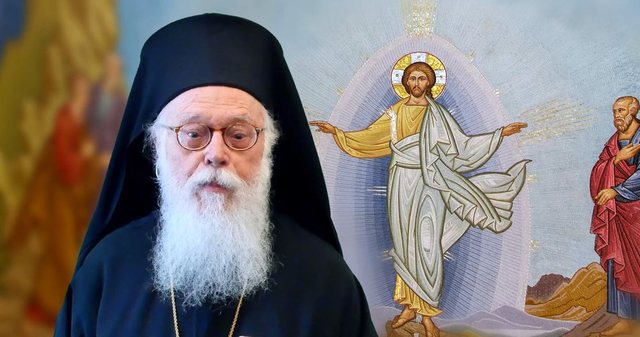
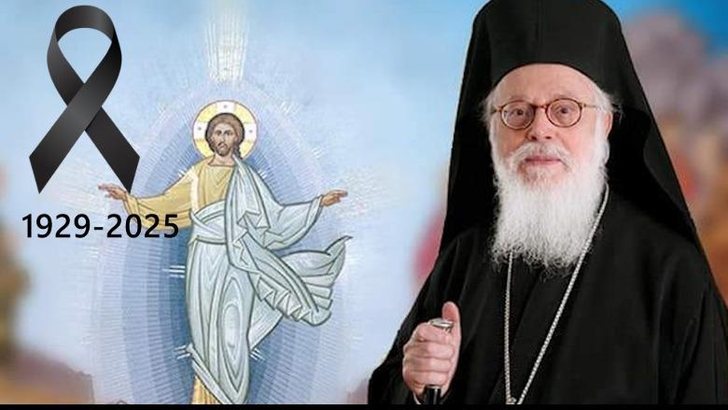
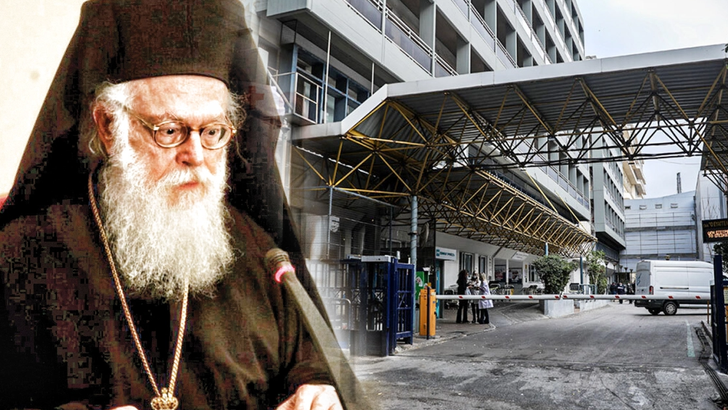
The Archbishop of Tirana, Durrës and All Albania, Anastas Janullatos, who rebuilt the Albanian Autocephalous Orthodox Church from the ruins, passed away at the age of 95.
On July 16, 1991, His Excellency arrived in Albania for the first time to revive the Orthodox faith after 24 years of atheistic darkness, after the communist regime banned the practice of religion by law in the years 1967-1991.
In "Rinas", he was warmly welcomed by a group of Orthodox believers, but also well-wishers and clergy of other faiths. From that day on, His Grace continued his activity full of challenges and unknowns. For His Excellency, his arrival in Albania was the third part of three periods of his life.
At the head of the Albanian Autocephalous Orthodox Church, Anastas Janullatos was enthroned on August 2, 1992, and was 63 years old, resisting both the protests of a political-Muslim group and the 1994 referendum where the then government introduced an article into the draft law that prohibited religious leaders with foreign citizenship from exercising religious duties. On November 6, the referendum was defeated by popular vote.
In 2000, following the proposal of the Athens Academy and many Albanian personalities, he was a candidate for the Nobel Peace Prize.
Early life
Anastas Yanullatos was born on November 4, 1929 in Piraeus, Greece. He was raised in the faith and during his formative years he actively participated in the Church. At first he enjoyed mathematics and during his teenage years he wanted to continue his studies in this science.
His ideas changed with the onset of World War II where Janullatos abandoned his desires for other fields of study and decided to pursue theology.
So thrilling was this desire that he said: "For me it was not enough to give something to God, I had to give myself completely to Him. I wanted my whole being to live in Christ."
Studies
In 1947, he graduated from high school with honors and in 1947, he began the Faculty of Theology at the University of Athens, where he graduated with honors in 1951.
In 1953 he graduated with honors from the National University of Athens. In the years 1965 - 1969 he completed postgraduate studies in History of Religions, Ethnology, Missiology and Africanology at the Universities of Hamburg and Marburg. He undertook research at Makerere University, in Kampala - Uganda, with a scholarship from the German Alexander von Humboldt Foundation.
He was an Honorary Doctor of the Faculty of Theology of the National and Kapodistrian University of Athens. He studied various religions (Hinduism, Buddhism, Taoism, Confucianism, African religions, Islam). He was Professor of History of Religions (1972-92) and Dean of the Faculty of Theology of the National and Kapodistrian University of Athens (1983-1986) BD and Th.D (with the highest honors) and is today Professor Emeritus of the same University. He has been declared Honorary Doctor of Theology or Honorary Doctor of Philosophy, Th.Dhc, DD hc PhD hc by 19 universities, faculties or university branches (in Greece, USA, Cyprus, Romania, Georgia, Albania, Italy), Corresponding Member (1993-2005) and Honorary Member (since 2006) of the Academy of Athens.
Postgraduate Studies
History of Religions, Ethnology, at the Universities of Hamburg and Marburg in Germany, (with a postgraduate scholarship from the Alexander von Humboldt Stiftung Institute). He also studied world religions, traveling to the countries where they flourished.
In addition to modern and ancient Greek, he mastered the foreign languages English, French, and German; he read in: Latin, Italian, Spanish, Russian, and Albanian.
Church Service
He played a leading role in the contemporary revival of the Orthodox Hierapostulcy in the world (from 1958). He was ordained deacon (1960); priest-archimandrite (1964), Bishop of Andrusa (1972) with the duty of General Director of the “Apostolic Service of the Church of Greece” (1972-91); Vicar Archbishop (Acting Archbishop) of the Holy Metropolis of Irinoupolis in East Africa (1981-1990); Metropolitan of Andrusa and Patriarchal Exarch in Albania (1991-1992). Archbishop of Tirana and All Albania (June 1992 - 2025).
Social activity
He was a member of: the Council of the Higher School of Social Workers (1977-84); the High Official Committee for the Church of Greece (1977-85); the Committee for Church Education of the Ministry of National Education and Religions (1977-1982); the Committee for the Protection of the Cultural Heritage of Cyprus (1985-91); the Scholarship Committee of the “Alexander Onassis” Foundation (1978-94); the “Alexander Onassis” Foundation (1994-2005). Member of the Filekpedheftiki Society (1994 onwards).
International inter-church activity:
He was Secretary General of the Executive Committee for Missionary Abroad (1958-61) and Vice President of the International Orthodox Youth Organization "Syndesmos" (1964-1977); Founder and President of the Inter-Orthodox Missionary Center "Porefthendes" (since 1963).
He was a member of the International Committee for Missionary Affairs of the World Council of Churches (1963-1969), Secretary for Missionary Research and Relations with Orthodox Churches at the WCC (Geneva 1969-1971).
He organized and directed the Center for Missionary Studies at the University of Athens (1971-1974) and the Inter-Orthodox Center in Athens of the Orthodox Church of Greece (1971-1974). As Director General of the Apostolic Service of the Church of Greece, he promoted theological, educational and publishing programs; in particular, he developed the foreign missions sector. In East Africa (Kenya, Uganda, Tanzania), he organized and developed Orthodox missions. He has been honored as the “Great Benefactor of the Patriarchate of Alexandria and All Africa”.
Vicar Archbishop in Africa
Archbishop Anastasios has played a leading role in the contemporary renewal of the worldwide Apostolate of the Orthodox Church. For a decade, from 1981 to 1991, he served as locum tenens (representative archbishop) of the Holy Archdiocese of Irinoupolis - West Africa (Kenya, Uganda, Tanzania). He founded and organized the Patriarchal School "Archbishop Makarios of Cyprus", which he directed for ten years; he ordained 62 African clergy and consecrated 42 anagnostics-catechists, originating from eight African tribes. During the same period, he promoted the translation of the Divine Liturgy into four African languages. He took care of the establishment of about 150 Orthodox parishes and the construction of dozens of churches, the construction of seven missionary stations and worked to open schools and medical centers.
Archbishop of Albania
In 1991, he was appointed Patriarchal Exarch in Albania by the Ecumenical Patriarch. In June 1992, Anastas Janullatos was elected Archbishop of Tirana, Durrës and all Albania.
As Archbishop of Albania (1992 to January 25, 2025), in extremely difficult circumstances, he rebuilt from the ruins and further developed the Autocephalous Orthodox Church of Albania, which had been disintegrated for over 2 decades.
More than 400 parishes were reorganized; the “Resurrection of Christ” Theological Academy was founded in Durrës (1992) and two ecclesiastical high schools; it educated and ordained 159 clergy.
He founded 50 youth centers in different cities. He took care of the translation and publication of liturgical books and other religious books. 155 new churches were built, 63 others were restored and more than 160 existing churches were repaired, as well as 75 church centers (Bishopric and Metropolitan Buildings, schools, medical centers, hostels, youth camps, etc.). The total construction work amounts to approximately 500 buildings.
Along with the work of revitalizing the Orthodox Church, innovative programs were also implemented in the sectors of health, social care, education, rural development, culture, and ecology. At the same time, he tried to help alleviate many tensions in the Balkans.
In 2010 he was awarded the "Gjergj Kastrioti - Skanderbeg" medal of the Republic of Albania by the President of the Republic of Albania, Mr. Bamir Topi.
Meanwhile, on Christmas Eve, December 25, 2017, a quarter of a century after arriving in our country, the head of the Albanian Autocephalous Orthodox Church, Anastas Janullatos, received Albanian citizenship. The decree was signed by then-president Ilir Meta.
Inter-church activity
He was repeatedly elected to prominent positions in the leadership of international organizations: Moderator of the Committee on World Mission and Evangelism (1984-1991) and of the Conference on World Mission and Evangelism in San Antonio, Texas (1989); member of the European Council of Religious Leaders (2003-2010); Vice-President of the Conference of European Churches (2003-2009); President of the World Council of Churches (2006-2013); Honorary President of the World Conference of Religions for Peace (2006 and onwards).
acts
Author of 24 books (research on African Religions, essays in Theology and History of Missions, sermons, etc.), including: Islam, an overview (16 editions), History of Religions - Traces from the search for the Transcendent, Globalism and Orthodoxy, Hierapostulism in the footsteps of Christ, To the ends of the earth, Coexistence, In Albania - Cross and Resurrection. He has published over 200 essays and articles on theological and pastoral topics. His studies and articles have been translated into 17 foreign languages.
laurels
He was honored with 27 medals and awards from many Orthodox Churches and various countries, such as: “Grand Cross of the Order of Honor of the Republic of Greece” (1997); “Athenagora Award for Human Rights” (New York, 2011); “Outstanding Contribution to the Unity of Orthodox Peoples” award (Moscow, 2005); “Gjergj Kastrioti Skanderbeg” decoration (Tirana, 2010).
Archbishop Anastasios was a profound scholar in the field of the History of Religions and interreligious dialogue. His significant contribution to the Christian Hierapostolate, to Theology, and to the peaceful coexistence of peoples and religious communities is universally recognized.